Senior Product Designer
Motion Systems - Interaction Standards for Product Clarity
Motion standards for focus, feedback, hierarchy, state change, and cross-platform interaction behavior.
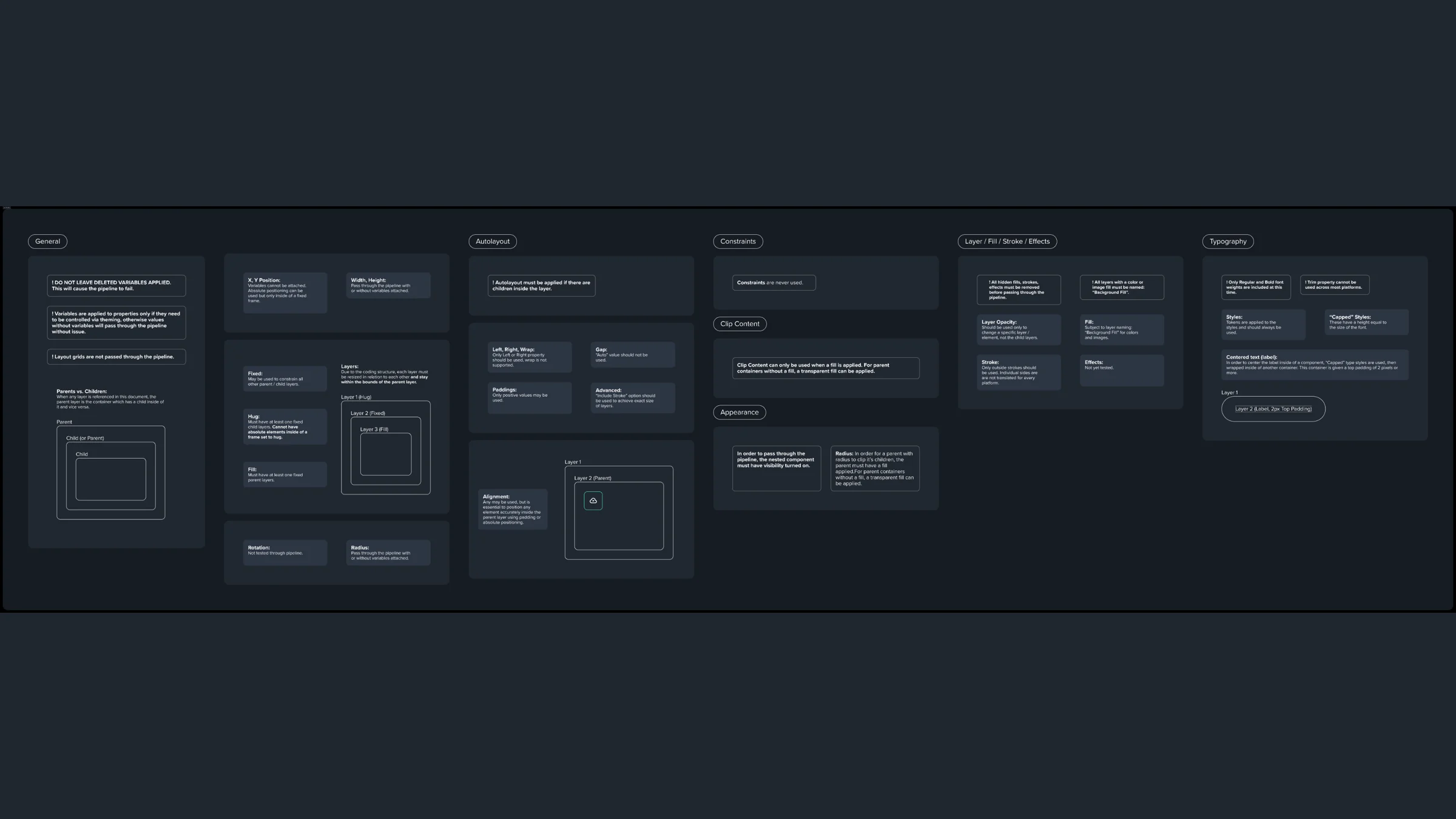
Overview
The motion component library extended Dark Matter beyond static components. It defined reusable motion patterns, timing guidance, and interaction behaviors so motion could support clarity, focus, feedback, hierarchy, orientation, and state change.
Problem
Motion was being created differently across teams and platforms. The result was inconsistent timing, uneven perceived quality, and more implementation effort than necessary. More importantly, motion decisions were not always connected to product behavior or accessibility needs.
My Role
I audited motion patterns, explored timing and easing approaches, created reusable examples, and documented guidance that designers and engineers could apply across product surfaces. The work connected motion standards back to component behavior, system documentation, and implementation guidance.
Approach
Principles before presets
The library needed reusable patterns, but it also needed rules for new situations. Motion principles helped teams make consistent decisions even when no exact component existed.
Performance is part of the design
Motion that hurts performance hurts the product. The standards emphasized lightweight behaviors, reduced-motion support, and platform-aware implementation.
Motion should explain change
The strongest patterns clarified focus, hierarchy, state, navigation, and orientation. Motion was most valuable when it made the interface easier to understand.
System Value
Framing motion as a system made it easier to align designers and engineers around expected behavior. Instead of treating animation as polish added at the end, the standards made motion part of the product architecture: how focus moves, how state changes are communicated, how hierarchy is reinforced, and how transitions stay consistent across platforms.
Outcome
The library established a shared motion language within Dark Matter across its multi-brand, multi-platform scope. Quantified adoption or efficiency outcomes will be added only when verified evidence is available.
Reflection
Good motion is not about making everything move. It is about helping people understand what changed, what matters, and where they are in the experience. The best motion standards are quiet, repeatable, accessible, and easy enough for teams to implement consistently.